AMD vs. Intel: Which Stock Could Rise More From Here?
Analyzing AMD versus Intel stocks to determine which possesses greater upside potential, focusing on earnings growth, server CPU market share, valuations, and artificial intelligence data center demand.

The race between AMD and Intel is closer than it appears initially, though currently, the more affordable stock—AMD—appears to possess greater upside potential. Intel has performed more aggressively over the trailing twelve months, gaining 322% compared to AMD’s 285%, meaning investors evaluating AMD stock versus Intel stock must look past historical price charts. Furthermore, the AMD stock forecast projects 105% earnings growth in 2027, contrasted with 36% in the Intel stock forecast, establishing AMD as the preferred AI chip investment between the two at present.
Also Read: If You Invest $100 in AMD Every Month, What Could You Have by 2030?
AMD vs Intel: Stock Forecast, AI Growth And Upside Potential
CPUs Are Back At The Center Of AI Data Centers
The contest between AMD and Intel begins with central processing units (CPUs). Demand for these processors within artificial intelligence data centers has accelerated due to their capability to manage inference and agentic AI workloads. AMD reported that the CPU-to-GPU ratio in these environments is shifting from 1:4 or 1:8 toward 1:1, projecting the server CPU market to reach $220 billion by the year 2030.
AMD CEO Lisa Su offered this perspective:
“CPUs are a very critical part of data center infrastructure.”
Server CPUs represent the most fiercely contested battleground in the AMD and Intel rivalry. Mercury Research data shows Intel maintains 65.5% of that market, although AMD expanded its market share by 7.2 percentage points year over year during the second quarter.
Intel CEO Lip-Bu Tan noted:
“AI is driving unprecedented demand for compute.”
AMD’s GPU Business Gives It An Extra Edge
This is the area where the dynamics between AMD and Intel begin to diverge. AMD additionally markets Instinct data center graphics processing units to major enterprise clients including OpenAI, Meta Platforms, and Anthropic. Its data center revenue surged 107% year over year in the second quarter to reach $6.7 billion, while Intel’s data center and AI (DCAI) division expanded by 59% to $6.3 billion.
Lisa Su stated during the Q2 earnings call for AMD:
“Demand for both accelerators and CPUs is growing well above our prior expectations.”
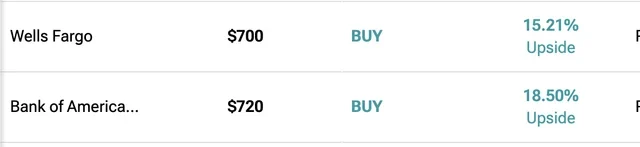
Wall Street analysts have grown increasingly optimistic regarding AMD’s long-term trajectory, raising the AMD stock forecast while moderating expectations for Intel.
Valuation Could Decide The Best AI Chip Stock
When evaluating valuations, the comparison between AMD and Intel diverges significantly. Intel’s recent rally has pushed its valuation to 63 times forward earnings, compared to 40 times forward earnings for AMD. Market consensus anticipates a 262% surge in Intel’s earnings for the current year, outpacing AMD’s projected 82% increase; however, that trend reverses by 2027, when AMD’s expansion accelerates to 105% while Intel’s growth is expected to decelerate to 36%. This discrepancy explains why the AMD stock forecast appears more robust than that of Intel.
Intel CFO David Zinsner remarked:
“Customers continue to signal a strong and sustainable spending environment.”
Furthermore, AMD projects the total addressable AI chip market to hit $2 trillion annually by 2030, which serves as a primary driver for designating AMD as the premier AI chip stock within this matchup.
For investors deciding between AMD stock and Intel stock today, the metrics favor AMD. The Intel stock forecast continues to rely heavily on its dominant position in server CPUs, and a valuation multiple of 63x leaves minimal margin for error if growth softens. While the competition between AMD and Intel remains intense in the CPU space, AMD emerges as the superior AI chip stock of the two based on pricing and artificial intelligence reach.
Frequently Asked Questions
01Which company currently holds more market share in server CPUs?
According to Mercury Research data, Intel retains 65.5% of the server CPU market, though AMD captured an additional 7.2 percentage points of market share year over year in the second quarter.
02How do the forward earnings valuations compare between AMD and Intel?
Intel trades at 63 times forward earnings, whereas AMD trades at a lower multiple of 40 times forward earnings.
03What are the projected growth rates for AMD and Intel by 2027?
The earnings forecast calls for 105% growth for AMD in 2027, compared to a projected 36% growth rate for Intel during the same year.