El Salvador targets $9 billion in transfers, but chooses stablecoins
El Salvador is increasingly adopting stablecoins for its multi-billion dollar remittance market through apps like Sivar, leveraging Coinbase infrastructure while maintaining its separate national Bitcoin initiative and reserves.

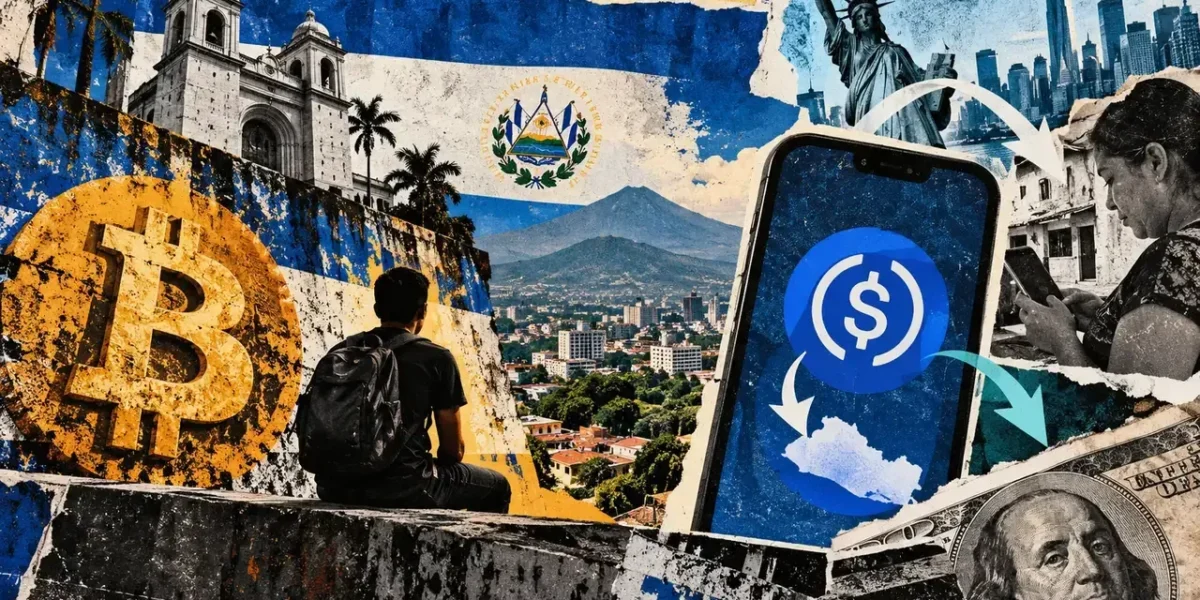
El Salvador is increasingly embracing stablecoins for remittances, carving out a distinct lane that separates everyday transactions from the nation’s groundbreaking Bitcoin initiative.
Developed by Modveon, a fresh national community and payments application called Sivar will leverage Coinbase infrastructure to facilitate stablecoin settlements via Base, as detailed in a Sept. 29 announcement. Individuals in the US can utilize debit cards to finance these transfers, while recipients located in El Salvador access funds through integrated wallets within the app.
This rollout signifies a notable shift for a nation that adopted Bitcoin as legal tender back in 2021, largely driven by the expectation that the cryptocurrency would reduce the cost of cross-border money transfers. Half a decade later, El Salvador continues to champion Bitcoin, yet dollar-tied tokens are seeing far broader implementation for practical payments.
By abstracting the underlying crypto mechanics from the user experience, Sivar enables people unfamiliar with virtual assets to send and receive funds without needing to navigate blockchain transactions independently.
Faryar Shirzad, Chief Policy Officer at Coinbase, noted that the economic model succeeds because these money movements occur entirely in digital dollars.
Sivar targets a $9 billion remittance corridor
The market potential is immense in a nation where financial support sent home by Salvadorans living abroad serves as a primary pillar of household income.
Coinbase reports that roughly $9 billion flowed into El Salvador via remittances in 2025, with approximately 92% originating in the United States. An estimated 1.6 million Salvadorans rely directly on these financial inflows.
Sivar plans to implement a flat fee of $2 per transaction regardless of the amount transferred, aiming at a sector where traditional remittance charges disproportionately impact smaller amounts. Transfers between verified accounts will clear as stablecoins utilizing Coinbase’s Base network, and recipients can redeem their balances for physical cash at upwards of 1,000 retail locations across El Salvador.
Prior to its official rollout, Coinbase stated that more than 25,000 Salvadorans had registered for the platform. Every participant is assigned a non-custodial wallet, with Coinbase supplying the necessary onramps, transfer APIs, and settlement framework.
This framework stands in contrast to the state’s initial Bitcoin campaign, which demanded that consumers engage directly with a highly volatile asset whose dollar equivalent could fluctuate significantly between the moment it was received and when it was spent.
Stablecoins maintain the familiar dollar valuation already favored by Salvadorans while simultaneously enabling blockchain-based clearing, thereby eliminating one of the main operational hurdles that hindered Bitcoin’s adoption as daily currency.
MoneyGram and Tether had already moved in
Sivar enters a stablecoin payments ecosystem that was already taking shape prior to its debut.
In April, MoneyGram broadened its USDC stablecoin balance capabilities to include El Salvador through collaborations with the Stellar Development Foundation, Crossmint, and Circle. This offering allows users to deposit funds into a dollar-pegged digital account, retain the balance securely, and later withdraw cash via physical MoneyGram outlets.
El Salvador marked the first new Latin American territory incorporated after MoneyGram initially rolled out the service in Colombia. The corporation indicated that its wider network encompasses nearly 500,000 storefronts spanning over 200 countries and territories, establishing a practical stablecoin bridge into regions where cash remains the dominant medium of exchange.
The world’s foremost stablecoin issuer has likewise established a permanent operational footprint in the country.
Tether transferred its corporate headquarters to El Salvador in 2025 following official licensing approval as both a stablecoin issuer and a digital-asset service provider. According to the firm, this relocation provides a strategic operational hub for creating emerging market products and collaborating closely with local enterprises and government bodies.
Additionally, Tether has integrated USDT functionality with Bitcoin’s Lightning Network, an initiative intended to merge dollar-denominated transactional capabilities with Bitcoin-driven settlement architecture.
Consequently, El Salvador is increasingly home to competing iterations of the same underlying concept: utilizing blockchain channels to transfer dollars with greater efficiency, rather than compelling households to absorb the price volatility inherent to Bitcoin.
Bitcoin remains, but its role has narrowed
Despite this extensive push toward stablecoins, El Salvador is by no means abandoning Bitcoin.
This month, the nation’s Bitcoin Office marked the fifth anniversary of its original adoption by spotlighting its Strategic Bitcoin Reserve, Bitcoin educational curricula within public schools, training initiatives for 80,000 government employees, designated Bitcoin Zones, and the CUBO+ developer training initiative. Official government figures referenced by the office place current national holdings at roughly 7,789 BTC.
Nevertheless, the state’s capacity to continue expanding that reserve using taxpayer funds has shifted.
The International Monetary Fund (IMF) announced this month that El Salvador has not allocated public funds toward purchasing Bitcoin since the launch of its initial program review. Official documentation supplied by the government demonstrated that subsequent additions stemmed entirely from private contributions, with the IMF stating it anticipates no further accumulation outside of verified donations.
These adjustments follow specific concessions agreed upon as part of El Salvador’s $1.4 billion IMF financing agreement. Legal amendments stripped away Bitcoin’s core status as mandatory legal tender, shifted private enterprise acceptance to a voluntary basis, and mandated that tax obligations be settled in US dollars.
Furthermore, the government agreed to phase out its direct involvement with the Chivo wallet app, subsequently transferring its majority ownership and administrative duties to a private operator.
Ultimately, the nation’s digital asset initiative presents a vastly different picture today compared to 2021.
Bitcoin retains its foundational place within El Salvador’s reserve planning, educational framework, and national identity, even as government-backed purchases have effectively ceased. Meanwhile, Sivar joins MoneyGram in testing whether stable digital dollars can succeed in everyday money transfers where widespread Bitcoin adoption previously faced obstacles.
This division now presents El Salvador with a new dual objective: verifying whether Bitcoin can endure as a long-term strategic asset while stablecoins function as the preferred technology citizens rely on to send money back home.
Frequently Asked Questions
- What is Sivar? Sivar is a national community and payments application created by Modveon that uses Coinbase technology to settle remittances in stablecoins on the Base network.
- How do stablecoins help El Salvador’s remittances? Stablecoins offer a dollar-pegged value that eliminates the price volatility of Bitcoin while using blockchain rails to keep transfer fees low, including a flat $2 fee offered by Sivar.
- Is El Salvador giving up on Bitcoin? No, Bitcoin remains a key part of the country’s national branding, reserves, and education programs, though its mandatory legal tender status and public-funded purchases have changed under IMF agreements.
- Which other companies offer stablecoin services in El Salvador? MoneyGram expanded its USDC-based transfers into the country earlier, and Tether established its global headquarters there in 2025.