
US jobs revision turns July’s 21,000 gain into a 10,000 loss
The US Bureau of Labor Statistics reduced payroll estimates for July and August by 60,000, turning July's job gain into a loss and presenting policymakers with a weaker labor market.

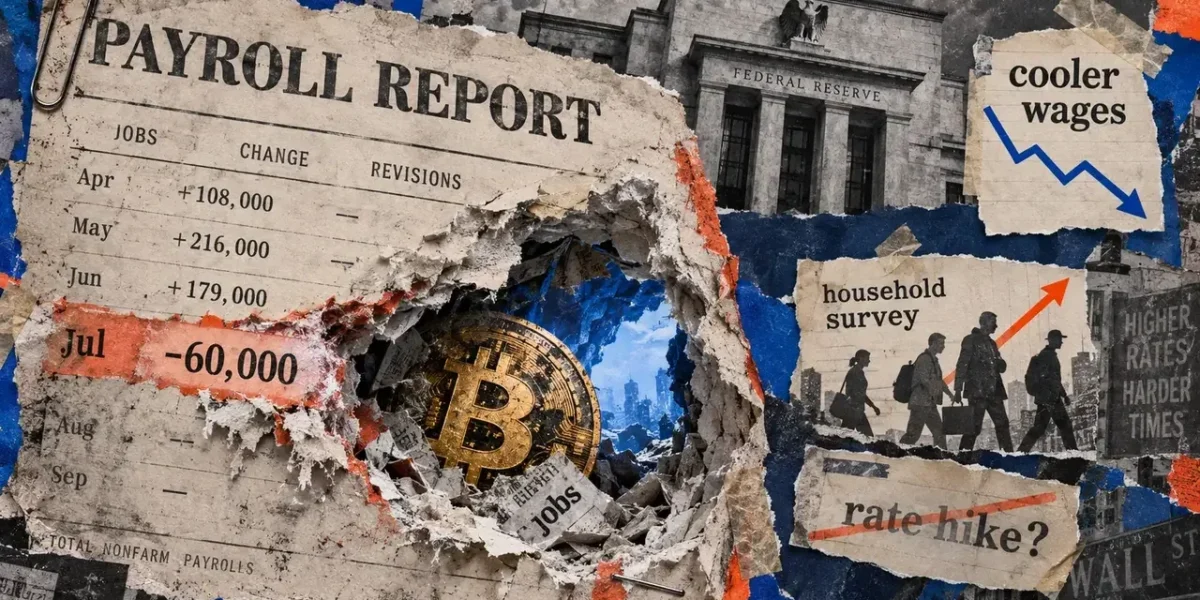
On Oct. 2, the US Bureau of Labor Statistics (BLS) reduced its estimates for payroll gains across July and August by a combined 60,000. This downward shift weakens the labor market justification for another interest rate hike by the Federal Reserve and could potentially lift some policy-related pressure off Bitcoin.
According to the September employment report, payroll growth registered at 29,000. Specifically, July’s figures were revised from an initial gain of 21,000 jobs to a loss of 10,000, while August figures dropped from 162,000 down to 133,000. Rather than highlighting fresh job losses in September, this 60,000 adjustment modifies prior calculations.
These updates follow the Fed’s Sept. 16 decision to raise its target interest rate by a quarter-point to a range of 3.75%–4%. In its policy statement at the time, the central bank noted that job gains had kept up with workforce expansion while inflation remained high. Friday’s employment data presents policymakers with a much weaker payroll environment than earlier projections indicated.
Slower reported wage increases and sluggish hiring offer less justification for monetary tightening aimed at cooling labor demand.
Nevertheless, elevated inflation still gives the Fed grounds to contemplate additional tightening measures. Released on Sept. 30, the personal consumption expenditures (PCE) inflation rate for August stood at 3.4% annually, or 3.0% when stripping out food and energy costs. Both metrics remained above the Fed’s established 2% target.
A softer labor outlook might decrease the risk of higher discount rates for Bitcoin, which is a frequent hurdle for speculative assets. However, an intraday event study published by New York Fed staff in February 2023 indicated that Bitcoin generally showed little response to monetary policy and macroeconomic surprises.
Meanwhile, the separate household survey painted a different picture. Estimated employment grew by 406,000, the labor participation rate shifted from 61.6% to 61.8%, and the unemployment rate ticked up slightly from 4.1% to 4.2%. Because the labor force expanded by 485,000, both employment and unemployment rose simultaneously.
While payrolls measure individual jobs, the household survey counts people and includes certain workers left out of payroll counts. The September monthly employment fluctuations fell short of the approximate BLS significance thresholds of 650,000 for household metrics and 122,000 for payroll numbers.
This mixed data prevents economists from definitively declaring either a recession or a decisive employment rebound. Although weaker payrolls give reason to doubt further monetary tightening, the household data complicates any reading of the report as proof of an employment downturn.
Any subsequent acceleration in hiring or inflation would weaken that perspective. The upcoming jobs report is slated for release on Nov. 6.
Frequently Asked Questions
01Why were the July and August job numbers revised?
The BLS revised July and August payroll gains down by 60,000 on Oct. 2 to correct and update earlier estimates, rather than reporting new job losses for September.
02How does this employment report impact the Federal Reserve?
The softer payroll data and slower wage growth offer less support for tightening monetary policy to control labor demand, though inflation metrics remaining above the Fed’s 2% target still leave room for potential tightening considerations.
03What does this mean for Bitcoin?
A softer labor market could lower the threat of higher discount rates, which can pressure speculative assets like Bitcoin, though historical studies have shown Bitcoin to be largely unresponsive to macroeconomic surprises.
04When is the next US jobs report scheduled?
The next jobs release is scheduled for Nov. 6.