SEC drops to 2 members, and 1 hidden rule shifts crypto power
Following Hester Peirce’s resignation, the SEC operates with only two commissioners under a new quorum rule that concentrates cryptocurrency policy decisions among fewer individuals during formal recusals.

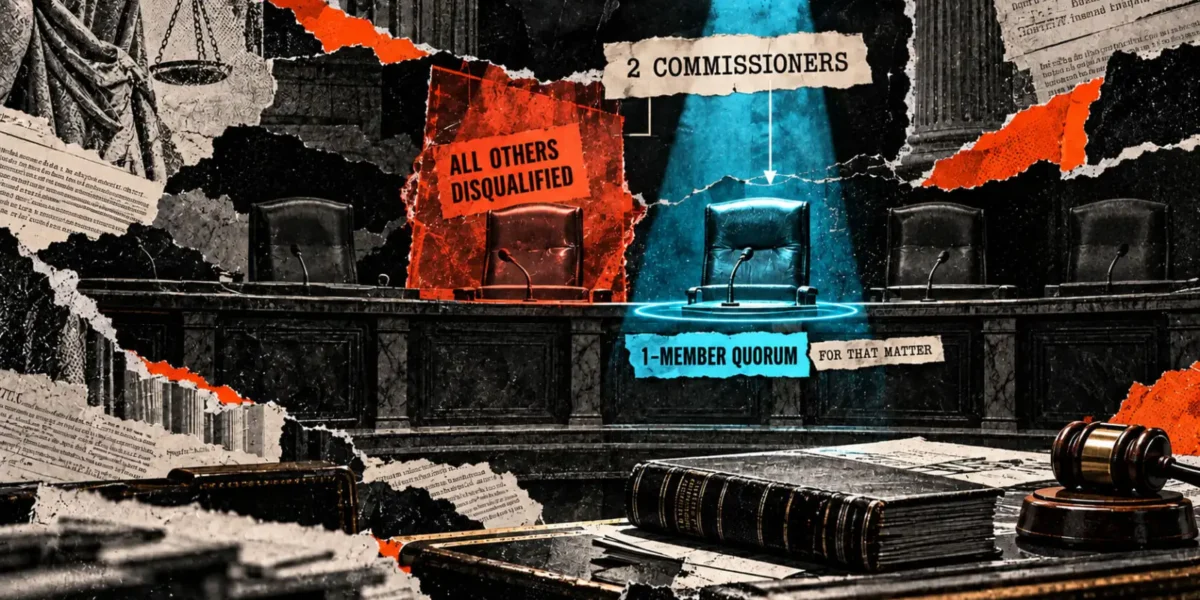
Following Hester Peirce’s resignation on October 2, Paul Atkins and Mark Uyeda remain as the SEC’s sole listed commissioners. Concurrently, a newly enacted regulation allows a single eligible member to form a quorum whenever every other sitting official must step away from a specific proceeding.
Given the current roster, this provision concentrates future decision-making authority over cryptocurrency policy among fewer individuals.
The single-member rule is triggered strictly by disqualification from an individual matter, enabling either remaining official to act as the official quorum under those circumstances.
Peirce’s departure became official on October 2, following a resignation letter dated September 21. Updated agency records from October 3 confirm Chairman Atkins and Commissioner Uyeda as the active members, with the historical service table marking the end of Peirce’s tenure on October 2.
While tokenized-stock trading relief has already been granted via a conditional order, both custody reform and a new offering framework remain mere proposals. With the commissioner count cut down to two, any subsequent agency-level determinations will rely on this smaller leadership group, bounded by the legal parameters governing each individual action.
The updated quorum regulation, signed on September 30 and implemented on October 2, amends 17 CFR 200.41—the guideline that determines how many commissioners must qualify to conduct official business.
Previously, a separate vacancy provision already permitted existing commissioners to constitute a quorum when fewer than three seats were occupied. Operating with only two filled seats was already permitted, and that rule even accommodated a hypothetical single-member Commission.
Historically, a distinct disqualification clause applied when two eligible commissioners remained after others recused themselves. The recent modification expands that specific provision down to a single eligible commissioner for a given matter if every other sitting member is barred from participating.
Under the present lineup, if Atkins recuses himself from a particular case, Uyeda can independently form a quorum, and vice versa.
This framework ensures that vacancies, absences, and formal recusals do not become interchangeable terms. Notably, a commissioner’s simple policy disagreement with a proposal does not satisfy the strict disqualification criteria required to trigger the rule.
In its published commentary, the SEC noted that recusals naturally occur and that the agency must maintain operations. The commission characterized the adjustment as a measure to enhance flexibility and finality, classifying it as an internal administrative change rather than a substantive regulation.
While framed as an administrative update, the change directly impacts who holds the power to enact Commission rulings. Meanwhile, Peirce expressed optimism in her farewell letter that Atkins, Uyeda, and the broader SEC staff will maintain a balanced approach between personal freedom and appropriate regulatory safeguards.
Crypto measures still require different kinds of action
Among the pending initiatives is the custody proposal introduced on October 1. This text outlines how regulated investment firms must handle the custody of crypto assets and related investments, establishes requirements for registered advisors managing client crypto funds, and details modern reporting mandates.
In an October address, Atkins grouped custody reform alongside offering proposals, formal Commission interpretations, and staff-led tokenization initiatives. This collection covers diverse regulatory instruments, each requiring distinct responsibilities from both staff and commissioners.
The official SEC registry continues to designate the release as a proposal, with public comments open through December 7. The existence of a smaller Commission or a revised quorum framework does not automatically transform a proposed custody framework into binding rules.
This initiative also illustrates how the regulatory agenda advanced prior to Peirce’s departure. Voting records from October show that Atkins, Peirce, and Uyeda unanimously approved release IA-7023 on October 1.
Those votes advanced the custody regulations to proposal status ahead of her resignation and the implementation of the new quorum standard.
A second pending initiative is Regulation Crypto Assets, introduced on August 18 and published on August 21. This proposal aims to establish offering exemptions for specific crypto investment contracts, institute disclosure mandates, and enforce ongoing anti-fraud and anti-manipulation duties, alongside a proposed conditional safe harbor regarding investment contract classifications.
Tokenized-stock access currently sits at a different phase of development. The Innovation Exemption issued on September 17 is a temporary, conditional exemptive order directed at designated tokenized National Market System (NMS) trading platforms and select liquidity providers.
According to the order’s fact sheet, it grants five-year conditional relief subject to restrictions on trading volume and stock symbols, identical shareholder rights, publicly auditable smart contracts, and transparent operational disclosures. When dealing with stocks tokenized by independent third parties, the framework also mandates issuer notification and an opportunity to challenge the action.
These conditions remain part of the established path for eligible market participants. Any future decisions regarding this relief will adhere to standard quorum guidelines, though the new quorum amendment neither broadens the scope of the exemption nor weakens its underlying protections.
A quorum does not replace voting or legal authority
For decisions handled via circulation, the SEC’s seriatim rule dictates that no policy is finalized until every member registers a vote or indicates an intended non-participation with the secretary.
Additionally, any commissioner retains the right to pull a circulated matter and demand formal joint deliberations.
Under 17 CFR 200.60, commissioners are expected to rigorously evaluate potential conflicts of interest and personal relationships, leaving individual qualification decisions to each member. The revised quorum clause explicitly applies to members who are otherwise disqualified.
Furthermore, staff no-action letters and tokenized-securities guidelines operate independently within the policy framework outlined by Atkins.
Statutory delegation provisions permit tasks to be handed off via formal orders or rules, while explicitly barring general rulemaking from this shortcut. This mechanism preserves ultimate Commission oversight, granting any single member the power to pull a delegated decision back for full review.
The diminished Commission remains strictly bound by existing law. The Administrative Procedure Act mandates standard notice-and-comment protocols for major rulemakings, subject to narrow exceptions. The SEC’s determination that its administrative quorum adjustment did not require public notice and comment does not serve as a universal exemption for future cryptocurrency regulations.
Under judicial review guidelines, courts retain the power to strike down agency rulings deemed unlawful, outside statutory boundaries, or enacted without mandatory procedures. Shrinking the pool of eligible commissioners does not grant additional substantive powers or protect decisions from judicial scrutiny.
The SEC’s published October tally reflects the three-member vote on custody rules, with no subsequent single-member crypto determinations recorded. Because the agency typically publishes votes only after matters reach finality, this record offers a limited snapshot rather than an exhaustive account of every internal action.
For participants in the digital asset sector, the next critical milestones include the October 20 deadline for offering-rule comments, the December 7 custody comment deadline, and any subsequent agency rulings concerning these proposals or trading exemptions.
The ultimate legal standing, documented approvals, and active participant rosters will demonstrate how this streamlined Commission functions moving forward.
While the updated exception preserves the agency’s ability to operate through recusals, its long-term impact on cryptocurrency policy will hinge entirely on which specific matters materialize, who remains qualified to deliberate on them, and the choices those individuals make.
Frequently Asked Questions
01What caused the SEC to drop to two commissioners?
Hester Peirce’s resignation, effective October 2, left Paul Atkins and Mark Uyeda as the agency’s only listed commissioners.
02How does the new quorum rule affect crypto decisions?
The rule allows a single eligible commissioner to constitute a quorum when all other sitting members are disqualified from a specific matter, concentrating decision-making power during recusals.
03Does the quorum rule replace public notice-and-comment requirements?
No. The administrative amendment regarding internal organization does not exempt future substantive crypto regulations from statutory notice-and-comment mandates under the Administrative Procedure Act.