Lightning apps using unpatched LDK risk Bitcoin theft from a reconnect lie
The Lightning Development Kit has resolved a critical vulnerability that allowed malicious channel peers to execute Bitcoin theft through deceptive reconnection claims and false payment updates.

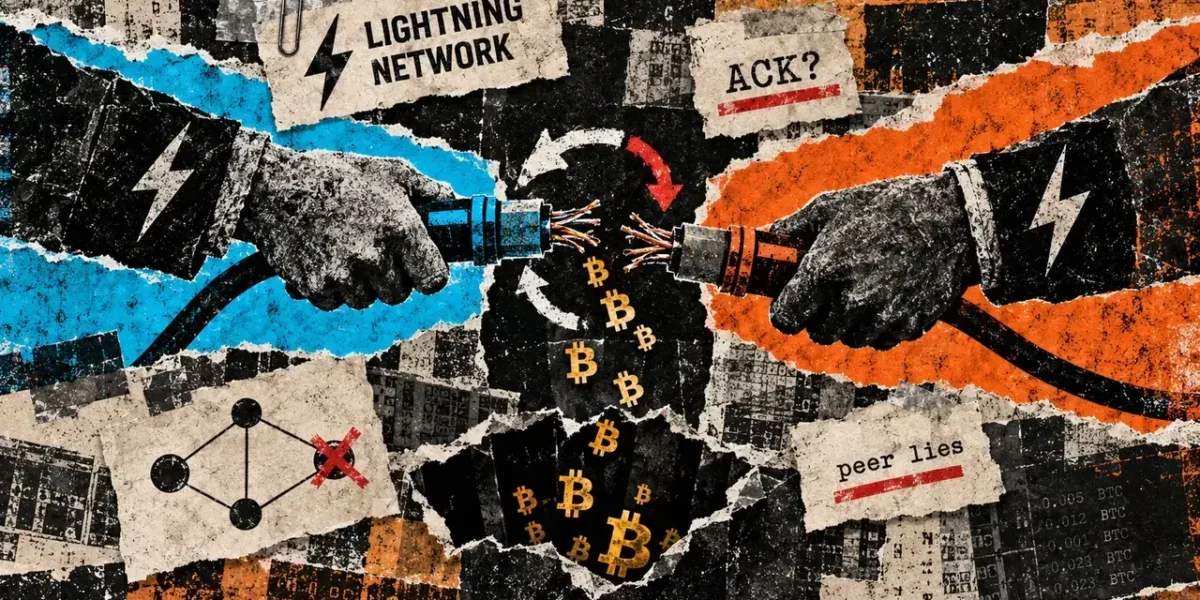
The Lightning Development Kit (LDK)—a library utilized for creating Bitcoin Lightning wallets and payment applications—has resolved a vulnerability that permitted a malicious channel peer to misappropriate the value of a forwarded payment through deceptive reconnection claims. Application developers running affected versions must integrate this update into their software.
Security releases v0.2.7 and v0.1.13, both dated October 1, resolve the LDK reconnect bug on the 0.2 and 0.1 branches, respectively. These patches were detailed by Bitcoin Optech in its October 9 newsletter.
How the LDK reconnect flaw could cost Bitcoin
The attack vector begins when a channel peer acknowledges an update, subsequently reconnects, and falsely asserts that the update was never received. Prior to the implementation of the fix, this deceptive assertion could trick LDK into signing a conflicting commitment transaction.
A commitment transaction defines a channel’s agreed-upon state and serves to settle it directly on the Bitcoin blockchain. As outlined in pull request 5057, the newly signed transaction escaped recording by LDK’s channel monitor—the specific component responsible for tracking on-chain channel claims.
This oversight could transform a forwarded payment into a direct financial loss. A malicious sender could confirm the transaction on-chain and let the payment successfully settle with the subsequent recipient. Afterward, the sender could reclaim the incoming payment contract upon its expiration, even though the forwarding node possessed the cryptographic secret typically required to claim the funds.
Consequently, the forwarding application would have paid out downstream without ever securing the matching incoming funds. The implemented fix restricts retransmission solely to instances where the peer’s acknowledgment is still outstanding, and mandates a force-closure of the channel if a peer asserts that an already-acknowledged update was missed.
In addition to the LDK reconnect patch, version 0.2.7 mitigates a separate theft vector involving LSPS2 just-in-time payments, a scenario where a liquidity service opens a channel to facilitate a payment.
An intercepted payment could falsify its value, inducing the service to open a channel and forward a larger amount of Bitcoin than the incoming payment actually provided, forcing the service to cover the deficit using its own capital. Pull request 5042 resolves this amount-checking vulnerability.
This particular security exposure impacts the LSPS2 service flow. While v0.1.13 includes the shared reconnect patch, its release notes do not feature the LSPS2 fix.
These vulnerabilities are distinct from the splice-fee diversion and saved-state loading defects highlighted in CryptoSlate’s September 13 report on LDK v0.2.6. Furthermore, Core Lightning operates as a entirely separate implementation, as noted below.
According to LDK’s architectural documentation, the software development kit is compiled and run directly within applications. Consequently, developers are required to incorporate the updated library code into their deployed software environments. For LSPS2 integrations, the commit notes for PR 5042 warn that payment contracts queued by older versions retain unverified amounts, meaning development teams must handle these pending contracts alongside updating the library itself.
Frequently Asked Questions
01What is the LDK reconnect vulnerability?
It is a flaw where a malicious channel peer could lie about receiving a payment update after reconnecting, tricking LDK into signing a conflicting commitment transaction that could lead to Bitcoin theft.
02Which versions of LDK contain the security patches?
Security releases v0.2.7 and v0.1.13 address the LDK reconnect vulnerability on the 0.2 and 0.1 branches, respectively.
03Do developers need to manually update their software?
Yes. Because LDK is compiled and executed inside applications, developers must incorporate the patched library code into their deployed software.