MiCA rejection forces German crypto platform into operational overhaul
BaFin rejected operator futurum bank AG's application, and a proposed restart depends on unfinished arrangements with regulated partners. The post MiCA rejection forces German crypto platform into operational overhaul appeared first on CryptoSlate.

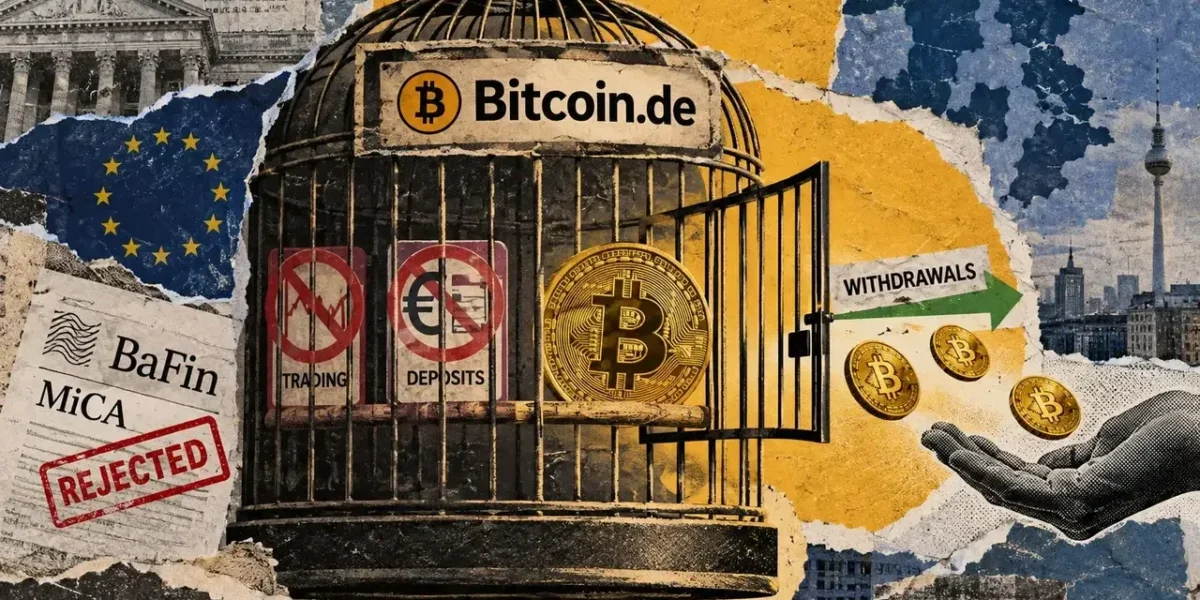
German cryptocurrency exchange Bitcoin.de is restructuring its operations after German financial regulators denied its application for a MiCA license, compelling the platform to delegate both trading and custody services to external partners.
The Federal Financial Supervisory Authority (BaFin) rejected the application submitted by Futurum Bank AG, the entity operating Bitcoin.de, to secure status as an authorized crypto-asset service provider under the European Union’s Markets in Crypto-Assets (MiCA) framework.
This ruling likewise terminated the regulator’s prior tolerance of Futurum Bank’s cryptocurrency offerings, and marketplace trading has largely been halted since June 12.
Users retain the ability to withdraw their digital assets, though euro deposits and trading functions are still on hold. Futurum Bank will maintain custody of the assets until they migrate to a new custodian, and current customer accounts and claims are not impacted.
Bitcoin Group reported that Futurum Bank submitted its MiCA authorization request in June 2025, leaving the application pending for upwards of 15 months.
MiCA rejection forces a structural reset
Following the adverse ruling from BaFin, leadership stated they had already developed a contingency framework to facilitate a swift pivot.
Consequently, Bitcoin.de intends to maintain operations by utilizing two regulated German institutions—one to serve as the trading counterparty for users and another to manage digital asset custody. The website will preserve its user interface, brand, and application while the licensed collaborators manage the heavily regulated operations.
This transition shifts Bitcoin.de’s core focus toward technology, user acquisition, and client service, while authorized third parties take charge of trade execution and asset safekeeping. This arrangement aims to sustain the marketplace without demanding that Futurum Bank independently execute the services BaFin declined to license.
The enterprise, which reports a user base exceeding 1.1 million clients, has not yet named the partnering institutions nor provided a specific timeline for when trading will recommence. Management noted that contracts are currently being finalized and bringing services back online remains a top priority.
Bitcoin Group and Futurum Bank are continuing their evaluation of the regulator’s ruling and retain the option to file an objection within one month of receiving formal notice. Submitting a brand-new application for authorization is also under consideration.
At present, commercial urgency centers on finalizing these partner contracts before the extended trading suspension drives users toward rival platforms. Bitcoin.de indicates that the technical integration needed for a relaunch is finished, making the regulatory rollout the primary hurdle to reviving full capabilities.
Upcoming milestones include announcing a restart schedule, reopening euro funding deposits, and transferring user holdings to the incoming custodian.
Frequently Asked Questions
01Why was Bitcoin.de’s MiCA application rejected?
BaFin rejected the application filed by Futurum Bank AG to operate as an authorized crypto-asset service provider under the European Union’s MiCA regime.
02Can users still access their funds on Bitcoin.de?
Yes, customers are still able to withdraw their cryptocurrencies, and existing logins remain unaffected, though trading and euro deposits are currently suspended.
03What is Bitcoin.de’s plan to resume full operations?
The platform intends to partner with two regulated German institutions—one to act as a trading counterparty and another to handle crypto custody, while Bitcoin.de manages the technology and customer interface.