
OpenAI, Google and Meta battle for AI internet domains as crypto firms target .bitcoin and .wallet
CryptoSlate's tally shows 11 applications for .bit and five for .crypto, with final strings due Nov. 17. The post OpenAI, Google and Meta battle for AI internet domains as crypto firms target .bitcoin and .wallet appeared first on CryptoSlate.

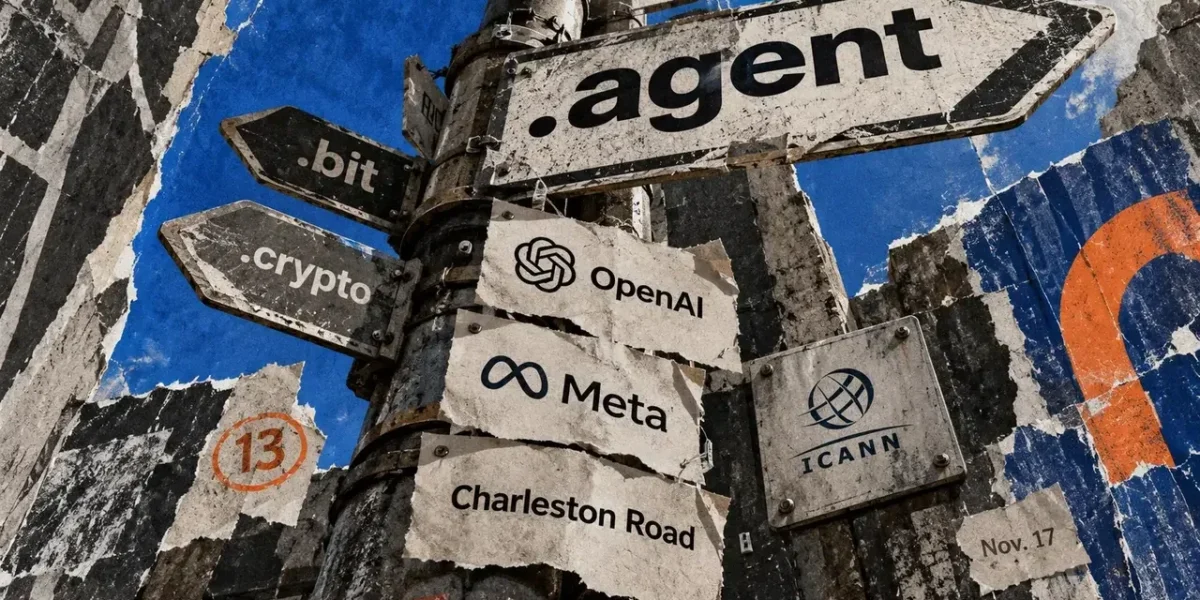
Tech giants OpenAI, Google, and Meta are currently vying for control of artificial intelligence-related internet domains, while cryptocurrency companies simultaneously target digital naming rights of their own.
As one of the most hotly contested names in the latest expansion of the internet’s address system, the .agent domain extension has attracted 13 applicants, including all three major technology companies.
This rush for naming rights follows the Oct. 7 disclosure by the Internet Corporation for Assigned Names and Numbers (ICANN), which revealed 1,615 applications during the first application round for new generic top-level domains since 2012.
Application records show that OpenAI has applied for 15 extensions altogether. These include .agent, .agi, .asi, .gpt, .model, .skill, .voice, and .mcp.
Meanwhile, Alphabet’s Google is pursuing several identical names—such as .agent and .mcp—and Meta is competing for .agent in addition to extensions tied directly to its own AI offerings.
The rivalry reaches past single corporate brands. Seven different applicants are pursuing .agi (referring to artificial general intelligence), and five are targeting .mcp, which stands for Model Context Protocol—an Anthropic-developed standard designed to link AI software with external data and tools.
Anthropic itself opted for just two extensions, .anthropic and .claude, thereby leaving the contested .mcp designation to other parties.
These filings illustrate how major tech firms are preparing for a future where autonomous AI agents increasingly navigate websites, software applications, and potentially financial systems.
Running a profitable top-level domain registry enables a company to oversee registrations and gather fees for any web addresses ending in that specific extension, provided they follow ICANN guidelines.
The financial commitments involved are considerable. Every standard application requires a $227,000 evaluation fee, and high-value disputes may eventually be resolved through auctions.
Demonstrating just how costly contested extensions can get, Google’s registry subsidiary successfully bid $25 million to acquire .app during a 2015 ICANN auction.
Crypto firms join the fight for internet naming rights
At the same time, the contest has attracted cryptocurrency enterprises looking to secure extensions tied to online payments, blockchain networks, and digital assets.
Preliminary contention data from ICANN reveals 11 separate applications for .bit, positioning it alongside .agent as one of the most fiercely contested individual names.
Furthermore, five applicants are pursuing .crypto, while .wallet and .dao have drawn four applications apiece. The .bitcoin, .btc, and .nft extensions each pulled in two bids.
This interest highlights a push to establish naming infrastructure capable of eventually bridging traditional web addresses with blockchain-based identities and financial offerings.
On Oct. 8, the Cardano Foundation announced that its application for .ada was moving forward to the next phase of the ICANN procedure, which could integrate the blockchain’s name directly into the global internet domain framework.
In addition, Frax Finance revealed it submitted a bid for .frax, detailing plans to link internet naming with AI-driven commerce, on-chain ownership, and payments.
These filings add a fresh layer to the rising overlap between AI and crypto infrastructure, especially as autonomous software grows increasingly capable of interacting with digital wallets and initiating payments.
Nevertheless, winning approval for a crypto-centric domain will not automatically grant the ability to run blockchain transactions or wallet functions; such capabilities demand separate technical integrations.
As of now, none of the contested domains have been awarded.
Frequently Asked Questions
01What is ICANN and why are companies applying for new domain extensions?
ICANN (Internet Corporation for Assigned Names and Numbers) manages the internet’s naming system. Companies apply for new generic top-level domains (like .agent or .crypto) to build brand authority, manage address registries, and position themselves for future technological integrations.
02How much does it cost to apply for a new top-level domain?
Each standard application carries an evaluation fee of $227,000, and highly contested names can lead to multi-million dollar auctions.
03Does owning a crypto-related domain enable blockchain transactions?
No. Securing a crypto-related domain name does not automatically activate wallet functionality or blockchain transactions, which require distinct technical integrations.