
Tiny Health Raises $33M To Explore What Gut Data Can Reveal About Future Health
Tiny Health has raised $33 million in a Series B funding round led by B Capital to expand its at-home microbiome testing platform, which analyzes gut data for infants and adults to support preventive health.

When Cheryl Sew Hoy’s daughter developed eczema, allergies, and food sensitivities, she began reading research on the infant gut microbiome. Her daughter had been born by C-section, whereas her younger son, born vaginally, had no similar conditions. The contrast made her wonder whether differences in their early microbial exposure played a role. While it did not give her a diagnosis for her daughter, it gave her an idea for a company.
“I learned that you can course-correct if you focus on the early life of the baby. If they’re missing certain beneficial bacteria, it can really cause a lot of issues for the infant,” Sew Hoy recalls. “I was reading all this literature and asked my doctors about it, and none of my doctors knew what I was talking about.”
A week after her son’s birth in 2020, she incorporated Austin-based Tiny Health. Today, the company announced it has raised $33 million in a Series B funding round led by B Capital, it told Crunchbase News exclusively.
The financing brings Tiny Health’s total funding to $46 million, following a $4.5 million seed round in 2021 and an $8.5 million Series A in late 2023. Existing investors Spero Ventures, The Venture City, and Overwater Ventures participated in the latest round, alongside new backers including Black Opal Ventures and Alumni Ventures. B Capital’s Nick Whitehead will join the company’s board.
Demand for Tiny Health’s at-home microbiome tests is growing. The startup’s overall revenue has more than doubled each year, according to Sew Hoy. Its B2B division, Powered by Tiny, which distributes tests through healthcare providers and other corporate partners, grew fourfold last year. Sew Hoy did not disclose specific revenue figures or the company’s valuation, though she noted the valuation was “much higher” than during its Series A.
From baby gut tests to adult testing
Tiny Health spent two years developing its platform before launching an at-home baby gut test in 2022. Healthcare was new territory for Sew Hoy, whose previous startup, the digital coupon company Reclip.It, was sold to Walmart Labs in 2013. Before raising a seed round, she invested $50,000 of her own capital into an initial study and spent approximately a year collecting stool samples and building the platform.
The baby test provided Tiny Health with a focused entry point. In Sew Hoy’s perspective, parents of children with conditions like eczema wanted more insight into the root causes, while clinicians lacked practical tools to apply emerging microbiome research. Although the company also offered pregnancy, vaginal microbiome, and adult tests, it initially centered its efforts on infant testing. Adults have since become its larger testing segment, according to Sew Hoy.
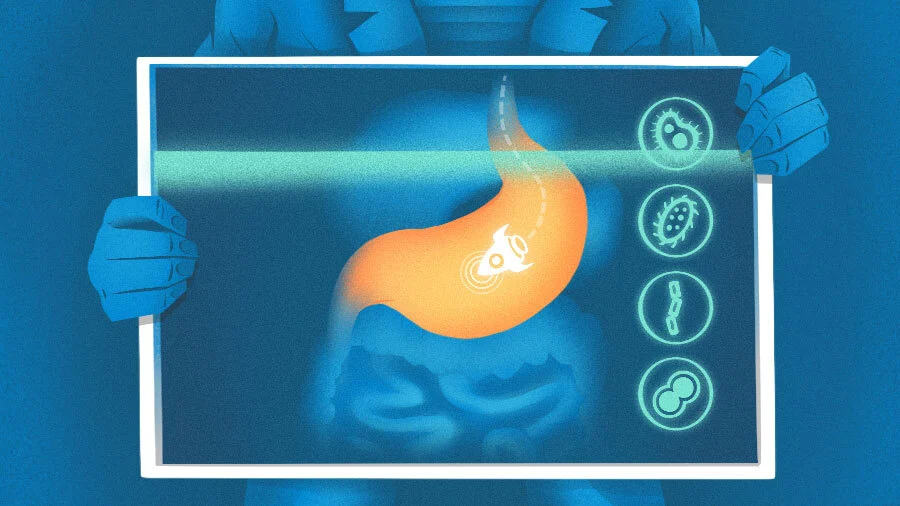
As for how it works, customers collect a small stool sample using a swab. After mailing the sample in, they receive a detailed report outlining the microbes detected, along with explanations and suggested next steps. Tiny Health also offers a subscription called Tiny Plus, which includes an initial baseline test and a subsequent retest.
Sew Hoy believes a primary differentiator for Tiny Health is its use of shotgun metagenomic sequencing to analyze microbial DNA. This technique offers a more comprehensive view of the organisms present in a sample compared to tests that screen for a restricted set of microbes, she explained. Chief Science Officer Kimberley Sukhum, who joined Tiny Health in 2021, leads its scientific initiatives. Other key leaders include co-founder Donald Koo—who joined Sew Hoy two years after inception to head technology—and Chief Medical Officer Dr. Elisa Song, an integrative pediatrician who previously advised the organization.
The reports examine the potential functions of the detected microbes and propose adjustments such as dietary modifications, complete with links to supporting research.
“We are a wellness test,” Sew Hoy stated. “We’re not a diagnostic … It’s very actionable, very evidence-backed.”
Insurance does not cover the tests, which identify microbes within a sample but cannot determine the exact cause of a person’s symptoms.
Other startups are pursuing alternative strategies in digestive health. Austin-based Throne Science manufactures a device that attaches to a toilet to track stool patterns and hydration levels, whereas Tiny Health analyzes microbial DNA from a gathered sample. Throne recently closed a $10 million Series A round led by Will Ventures.
Beyond direct-to-consumer testing
Tiny Health’s fastest-growing venture is Powered by Tiny, which supplies testing through healthcare providers and companies integrating it into their own service offerings. Partners include Superpower, Fullscript, and Mayo Clinic’s Executive Health and Longevity Programs, according to Tiny Health. The firm also collaborates with supplement manufacturers and academic researchers aiming to measure the microbiome during clinical studies.
Customers initially brought their direct-to-consumer results to their physicians, according to Sew Hoy. Consequently, some clinicians began reaching out to Tiny Health for assistance in interpreting the reports. Today, the startup supports over 6,000 practitioners and provides training on integrating its tests into patient care.
Its enterprise segment supplies testing to fellow health and wellness enterprises, including via technology integrations. As noted, this B2B arm has quadrupled in size. Scaling both businesses, alongside clinician training, remains a core priority for the newly acquired capital.
Nick Whitehead, senior principal at B Capital, told Crunchbase News that his firm identifies an opportunity to make microbiome research increasingly useful for consumers as preventive health interest mounts.
“We’re in the middle of a real shift in how people engage with their own health. Consumers are paying out of pocket for wearables, blood panels, and full-body scans because they want to understand what’s happening inside their bodies before something goes wrong,” he wrote via email. “The gut microbiome is one of the most important and least understood pieces of that picture … Tiny Health turns that science into something people can actually act on, and we believe the company that does this well will define the category.”
Whitehead also highlighted Tiny Health’s strong reputation among the clinicians consulted during the firm’s due diligence.
“Tiny Health was consistently the test they rated highest,” he noted.
An additional appealing asset, Whitehead added, is the company’s extensive repository of family data tracked from infancy onward.
Putting its data to work
Tiny Health has amassed nearly 200,000 microbiome samples over time, per Sew Hoy. To leverage these samples, the startup is developing a tool known as TinyAI, which will utilize its proprietary data and peer-reviewed research curated by its scientific team to help individuals interpret their results. The enterprise also leverages anonymized health information supplied by customers to power this initiative.
Over the long term, Tiny Health aims to uncover patterns capable of identifying health risks before clinical conditions emerge. Existing research has linked gut microbiome imbalances to upwards of 100 diseases.
“We want to be able to predict disease before it happens and intervene before it happens,” Sew Hoy expressed in an interview with Crunchbase News.
A pressing question remains whether microbiome-guided interventions can reliably improve health outcomes. Tiny Health reports having published four scientific papers, including an infant-focused study, and intends to back additional research involving adult populations.
Currently, the organization employs roughly 40 individuals and anticipates hiring 30 more. The fresh capital will be deployed to expand partnerships with healthcare providers and other corporate entities, as well as to finance research exploring whether alterations to the microbiome can enhance health outcomes. Specifically, it plans to allocate $5 million toward a program granting researchers and clinical partners access to its testing infrastructure and dataset.
Frequently Asked Questions
- What does Tiny Health test? Tiny Health analyzes microbial DNA from at-home stool samples using shotgun metagenomic sequencing to provide insights into gut health.
- Is Tiny Health a diagnostic tool? No, the company classifies its services as wellness tests rather than medical diagnostics.
- Who led Tiny Health’s Series B round? The $33 million Series B round was led by B Capital.
- Are Tiny Health tests covered by insurance? No, health insurance does not cover the company’s tests.
Related Crunchbase query:
- Global Venture Funding To Gut Microbiome-Related Startups In 2026
Related reading:
- Pooptech Startups Are Passing The Smell Test
- Investments In Poop Startups Are Piling Up
Illustration: Dom Guzman