
3 Key Factors Behind India’s Stock Market Sensex and Nifty Crash Today
India's stock market indexes, Sensex and Nifty, suffered a severe crash, dropping to their May 2024 lows due to foreign institutional investor selling, rising Brent oil prices, and heavier capital gains taxes.

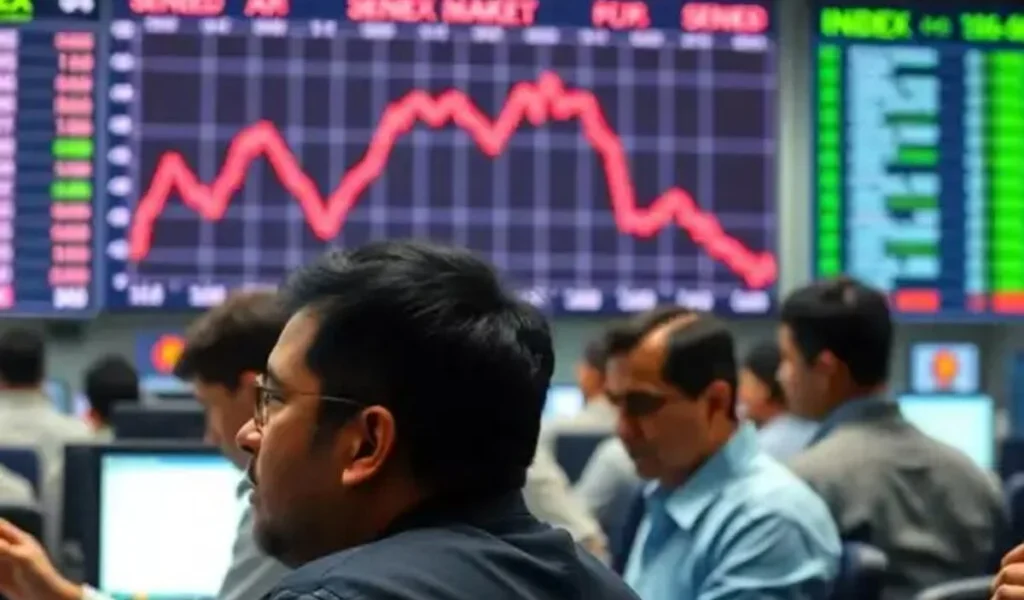
Shortly after the opening bell on Monday, India’s benchmark stock indexes—the Sensex and the Nifty—suffered a severe downturn. During the session, the Sensex dropped by more than 1,000 points, while the Nifty tumbled by 300 points. This sharp decline has left retail investors startled, with the majority of their holdings currently showing losses. The Nifty retreated to the 22,800 threshold, and the Sensex slid down into the 72,900 range, bringing both indices back down to their May 2024 lows. From a broader perspective, this indicates that the market has essentially remained stagnant for a full two and a half years.
Also Read: When Will Nvidia Stock Go Down? Here’s What Could Trigger It
Sensex and Nifty Crash: 3 Reasons India’s Stock Market Is Plunging
- Foreign Institutional Investors (FIIs) Continue To Sell: Recent figures indicate that FIIs offloaded $384.67 million worth of equities on Friday. In contrast, domestic institutional investors (DIIs) purchased $295.63 million in equities. This created a notable gap of $89.04 million at the close of trading, which ultimately rattled the markets on Monday. Ongoing record selling by FIIs continues to heavily pressure India’s Sensex and Nifty indices.
- Brent Oil Rises Above $106: Even though crude oil declined to $93 per barrel on Monday, Brent crude climbed to $107 after surging 2.9% during the session, raising concerns about elevated borrowing costs. This upward movement is expected to impact fuel, transportation, and merchandise expenses, ultimately driving up broader consumer prices. Because these financial elements are deeply interconnected, the initial fallout is being absorbed by the stock market, leaving the Indian Sensex and Nifty to bear the brunt.
- The Great Tax Burden: As foundational pillars of the Indian stock market, the Sensex and Nifty are currently on fragile footing, with retail investors bearing the immediate impact. Market stability has been elusive since July 2024, when the government raised the Short-Term Capital Gains (STCG) tax from 15% to 20% and the Long-Term Capital Gains (LTCG) tax from 10% to 12.5%. These heavier taxes have weighed heavily on traders by eroding profits, resulting in a subdued sentiment among retail participants.
Frequently Asked Questions
01What levels did the Sensex and Nifty drop to during the crash?
During Monday’s trade, the Nifty fell to the 22,800 level, while the Sensex plunged into the 72,900 range, pushing both indices down to their May 2024 lows.
02How did capital gains taxes impact the market?
Introduced in July 2024, the government increased the Short-Term Capital Gains (STCG) tax from 15% to 20% and the Long-Term Capital Gains (LTCG) tax from 10% to 12.5%, which has eroded trader profits and dampened retail investor sentiment.
03What role did oil prices play in the market drop?
Brent oil rose to $107 per barrel—climbing 2.9% during the session—which fueled concerns over higher borrowing costs and increased consumer prices for fuel, transportation, and goods.