US judge kills Milei’s LIBRA memecoin lawsuit, leaving investors stranded
A US judge has dismissed a class-action lawsuit filed by investors who lost money in the LIBRA and M3M3 memecoins, which were previously endorsed by Argentine President Javier Milei.

Individuals who invested in LIBRA—a memecoin previously endorsed by Argentine President Javier Milei—have lost their path to recovering funds via a district court, following a U.S. judge’s decision to throw out the proposed class-action lawsuit concerning both LIBRA and another memecoin called M3M3.
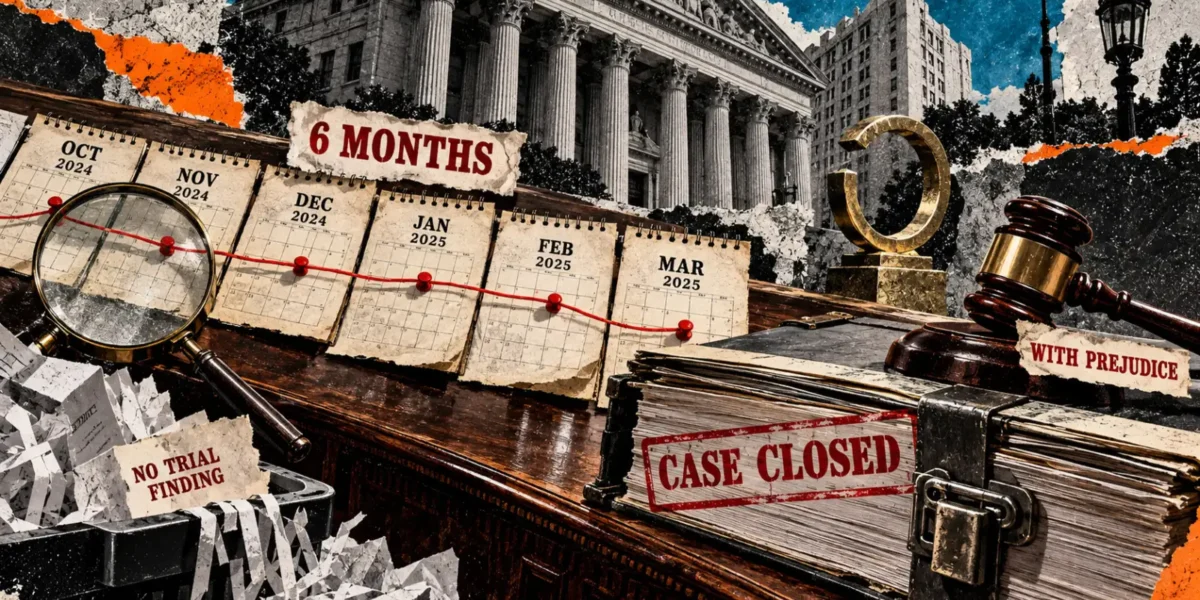
In a ruling issued on Sept. 29, Judge Jennifer L. Rochon dismissed the amended complaint with prejudice, denied any further opportunities to amend the filing, and ordered the Southern District of New York lawsuit to be closed. Furthermore, the ruling barred investors from expanding the legal action to include three additional tokens.
The plaintiffs contended that insiders manipulated token launches, siphoning money out of liquidity pools at the expense of external buyers.
As outlined in the court’s summary of the complaint, LIBRA debuted on Feb. 14, 2025, with promotion from Milei, who backed away from the project later that same day. This dismissal ultimately addressed the legal viability of the accusations as well as the court’s jurisdiction.
Why the racketeering claims in the LIBRA case failed
The primary federal accusation hinged on the Racketeer Influenced and Corrupt Organizations Act (RICO). This statute mandates a pattern of connected racketeering activities that either covers a substantial timeframe or presents a threat of ongoing criminal conduct.
The court concluded that neither type of continuity was sufficiently established in the pleadings against the Kelsier defendants—which include Kelsier Ventures and Hayden Davis—nor against Benjamin Chow, the co-founder and former CEO of Meteora.
Regarding the first requirement, the court viewed the contested actions, spanning from October 2024 through the filing of the complaint in March 2025, as a duration of only six months. The presence of multiple schemes and a potentially vast pool of victims was insufficient to make up for such a brief timeframe.
The decision referenced Second Circuit legal precedent, which generally calls for a more extended timeline to satisfy this form of continuity, while explicitly noting that a two-year window is not a rigid boundary.
The alternative legal path required facts that demonstrated an ongoing threat. The court determined that generalized claims regarding a recurring token-launch business model and references to external projects failed to prove—on a defendant-by-defendant basis—that the alleged wire fraud constituted a standard way of doing business. Consequently, the dependent RICO conspiracy charges were also dismissed.
Had the proposed amendment been accepted, it would have introduced MELANIA, ENRON, and TRUST as new tokens, alongside an additional plaintiff and fresh defendants. However, the judge noted that this would have merely stretched the alleged racketeering window to seven months while failing to supply facts that resolved the ongoing-threat deficiency.
Following the failure of the RICO counts, the court discarded the remaining state-law claims against the Kelsier defendants due to a lack of personal jurisdiction. Arguments pointing to nationwide social media and cryptocurrency infrastructure fell short of demonstrating the necessary ties to New York. As a result, the court did not evaluate the merits of those state-law matters.
All allegations against Chow were thrown out due to pleading deficiencies, notably the lack of sufficient claims demonstrating fraudulent intent. The actions against Meteora likewise failed because the investors did not properly establish it as a legal association or partnership that could be sued.
Hayden Davis previously contested allegations of wrongdoing and challenged the court’s jurisdiction in June 2025. This fresh ruling transforms that earlier legal contest into a definitive setback for investors looking to recoup their losses through this particular lawsuit.
Crucially, the directive does not establish that every contested action was legal, nor does it rule on the validity of any alternate avenues for recovery.
Frequently Asked Questions
01What is the LIBRA memecoin lawsuit?
It was a proposed class-action lawsuit filed by investors in the LIBRA and M3M3 memecoins, seeking to recover financial losses. The suit named figures such as Argentine President Javier Milei (who briefly promoted LIBRA), along with various developers and entities.
02Why was the lawsuit dismissed?
U.S. Judge Jennifer L. Rochon dismissed the complaint because the plaintiffs failed to adequately plead key legal requirements under the Racketeer Influenced and Corrupt Organizations Act (RICO), specifically regarding the duration and continuity of the alleged racketeering activity.
03Can the plaintiffs appeal or amend the complaint again?
No. The judge dismissed the amended complaint with prejudice and explicitly denied permission to amend the filing again, closing the case in the Southern District of New York.