Blast shuts down $20M layer-2 network, forcing Oct. 26 exit deadline
Ethereum layer-2 network Blast announced it is shutting down due to maintenance costs exceeding revenue, setting an October 26 deadline for users to withdraw funds back to the mainnet.

On Oct. 2, the Ethereum layer-2 network centered around native yield, Blast, announced it is shutting down due to maintenance costs exceeding its revenue.
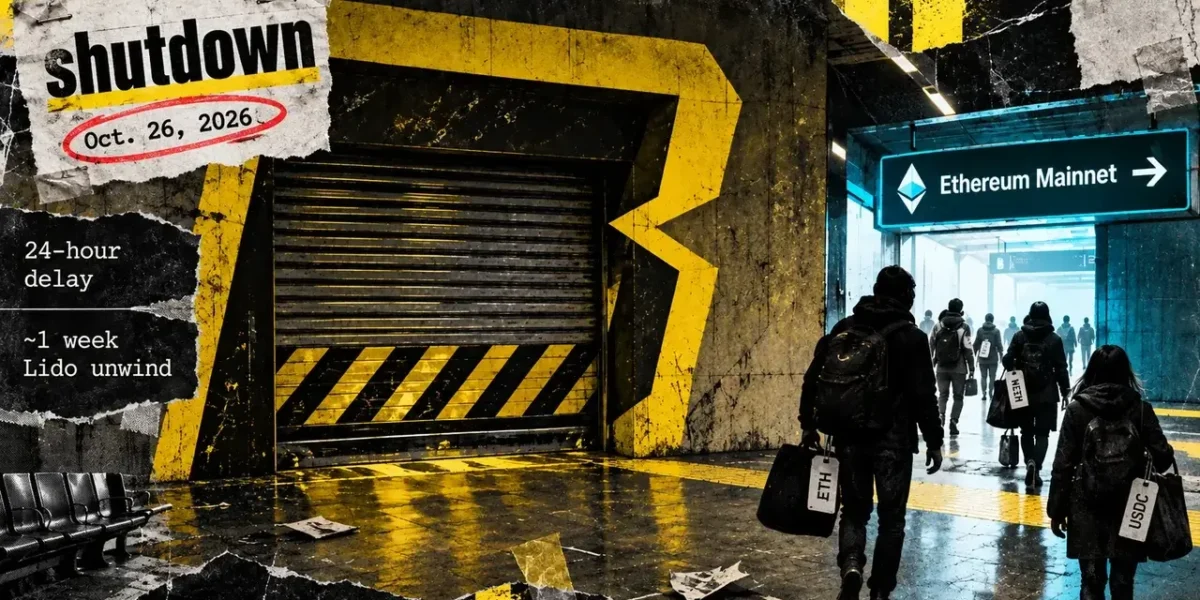
To withdraw funds via the standard interface, the project instructed users to transfer their assets back to the Ethereum mainnet by Oct. 26.
In its closure notice, Blast stated it found no viable path toward long-term economic sustainability. The network will wind down its chain via an asset withdrawal procedure that will temporarily halt users’ capability to exit.
This shutdown arrives nearly three years after Blast revealed $20 million in backing from Paradigm and Standard Crypto on Nov. 20, 2023. The platform launched early access that same November, while its mainnet debut was initially scheduled for February 2024.
According to its technical documentation, the project functions as an Ethereum-compatible optimistic rollup that routes yield generated from ETH staking and real-world asset protocols directly to participants. Its official site points to Lido and MakerDAO as primary yield generators and features several other investors among its supporters.
Although this yield architecture was designed to grant holders profits generated by these underlying protocols, Blast has concluded that current operational expenses no longer validate maintaining the network.
Blast’s withdrawal pause and Oct. 26 cutoff
Blast stated it will initiate the process by pulling its assets from Lido—noted in its framework as a key provider of ETH staking yield—a procedure anticipated to last roughly one week.
Throughout this unwinding phase, user withdrawals will be paused temporarily, even after the network shortens its withdrawal waiting period to 24 hours.
As outlined in the statement, withdrawals will open back up under the revised 24-hour delay once the Lido asset retrieval finishes. The approximate one-week suspension and the post-reopening withdrawal delay represent two distinct steps in the exit schedule.
The directive to shift funds back to Ethereum encompasses balances stored inside Blast’s web application, referred to in the notice as the PWA. Blast strongly advised all participants to complete their withdrawals prior to Oct. 26.
Following that deadline, Blast noted that assets will still be recoverable, though users will be forced to engage directly with its bridge contracts stationed on the Ethereum mainnet.
Blast committed to releasing comprehensive guidelines for that alternative pathway prior to the cutoff date. While the announcement provides an estimated timeframe for the Lido asset removal, it omits a precise calendar date for when standard withdrawals will become available again.
Frequently Asked Questions
01Why is Blast shutting down its layer-2 network?
Blast stated that maintaining the chain has become more expensive than the revenue it generates, leaving no credible path to economic sustainability.
02What is the deadline for withdrawing funds through the normal interface?
Users are asked to move their assets to the Ethereum mainnet by Oct. 26 to withdraw via the normal interface.
03What happens if I miss the Oct. 26 withdrawal deadline?
Assets will still be recoverable after Oct. 26, but users will need to interact directly with Blast’s bridge contracts on the Ethereum mainnet.