Tether freezes $1.4M in TRON vaults and THORChain stalls
THORChain experienced a temporary halt in its TRON operations after Tether blocklisted four vaults holding approximately 1.45 million USDT. Restrictions were lifted later that day, allowing trading and swaps to resume.

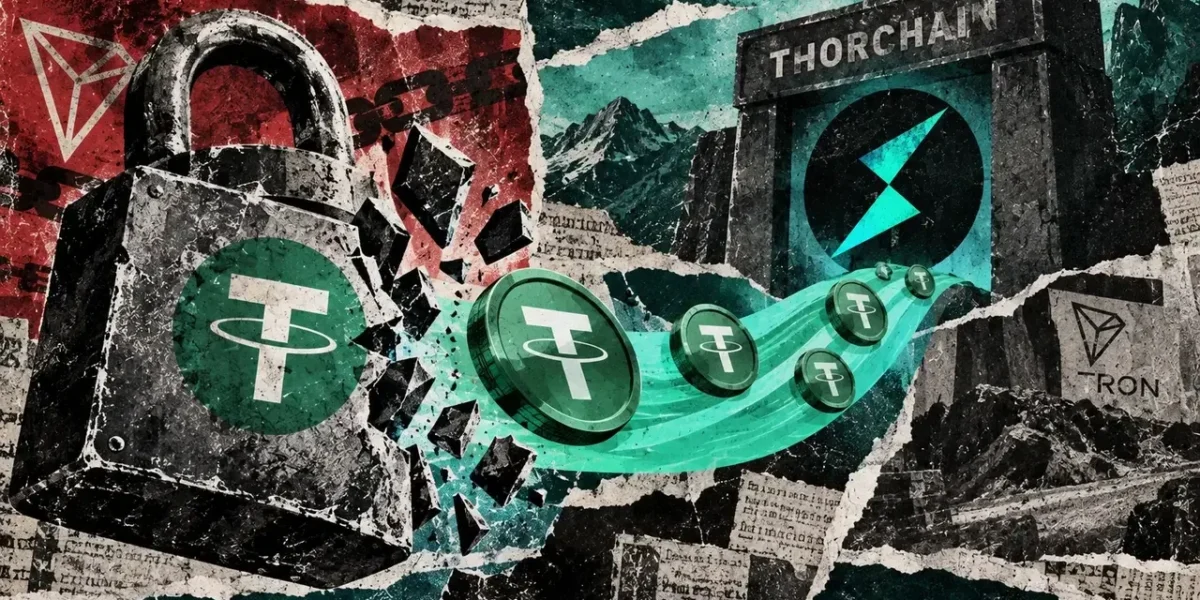
Operations for THORChain on the TRON network experienced a halt on Oct. 9 as a result of a USDT vault blocklist, based on information shared by co-founder Chad Barraford and researcher Khal. The impacted balance was estimated by the researcher to be approximately 1.45 million USDT.
Updates from both accounts indicated that the restrictions were subsequently lifted. Barraford noted at 3:35 p.m. UTC that the addresses appeared to be unfrozen and that trading would restart shortly. Shortly after, at 3:58 p.m. UTC, Khal confirmed that swaps for TRON USDT had recommenced. An earlier payout queue highlighted the temporary standstill prior to the announced resumption of swaps.
In his initial breakdown, Khal detailed that block 86958330 placed four out of THORChain’s six TRON vaults on a blocklist. These specific vaults accounted for 93% of the protocol’s TRON USDT holdings, concentrating the impact on funds required for fulfilling payments along that pathway.
According to his findings, TRON trading activities, transaction signing, and liquidity-provider functions paused roughly 27 minutes afterward, leaving about $363,000 in payouts backed up in the queue throughout the freeze.
Barraford stated that the protocol was given no prior warning or communication regarding the measure and remained unaware of the underlying reason. Khal suggested that the vaults might have become unintentionally ensnared in a wider-scale blocklist that targeted around 30 additional wallets.
This event arrives amid heightened attention toward the protocol’s management of illicit transaction flows. On Oct. 8, a trading volume spike on THORChain throughout September overlapped with activity linked to the Bitget hack, during which the protocol declined to selectively block specific addresses.
Two layers of control
Documentation regarding THORChain’s vaults outlines accounts overseen by validator nodes, which maintain assets across external blockchains and manage incoming and outgoing transactions.
While dividing control over these accounts among validators dictates authorization for payments, the underlying tokens inside them remain governed by the rules set by their respective issuers.
THORChain addressed a similar nuance in an October 1 blog summary, explaining that node operators hold the ability to pause an individual chain or the entire protocol for safety purposes, but cannot selectively block an isolated swap.
On the other hand, Tether maintains that its policy for freezing wallets aligns with the sanctions list from OFAC and applies to secondary-market wallets as well. Its capacity to restrict USDT transfers functions independently from the validator governance securing THORChain’s vaults.
Nevertheless, the structural dependency persists: decentralizing transaction signing authority does not strip Tether of its capability to freeze USDT stored within the accounts utilized by those transactions.
Frequently Asked Questions
01Why did THORChain’s TRON operations pause?
Operations were briefly interrupted on Oct. 9 after a USDT vault blocklist affected four of THORChain’s six TRON vaults, freezing approximately 1.45 million USDT.
02Were the restrictions permanent?
No, both co-founder Chad Barraford and researcher Khal confirmed later that day that the addresses were unfrozen and TRON USDT swaps had resumed.
03Can THORChain selectively block individual wallets?
According to THORChain’s documentation, node operators can pause a chain or the entire protocol for safety, but they cannot selectively remove or block an individual swap.