Bitcoin fails to sustain $85,000 breakout, and bond yield spikes are blamed
Bitcoin failed to maintain its breakout above $85,000, retreating below $84,000 as spiking government bond yields and recovering stock markets followed the release of the August PCE inflation report.

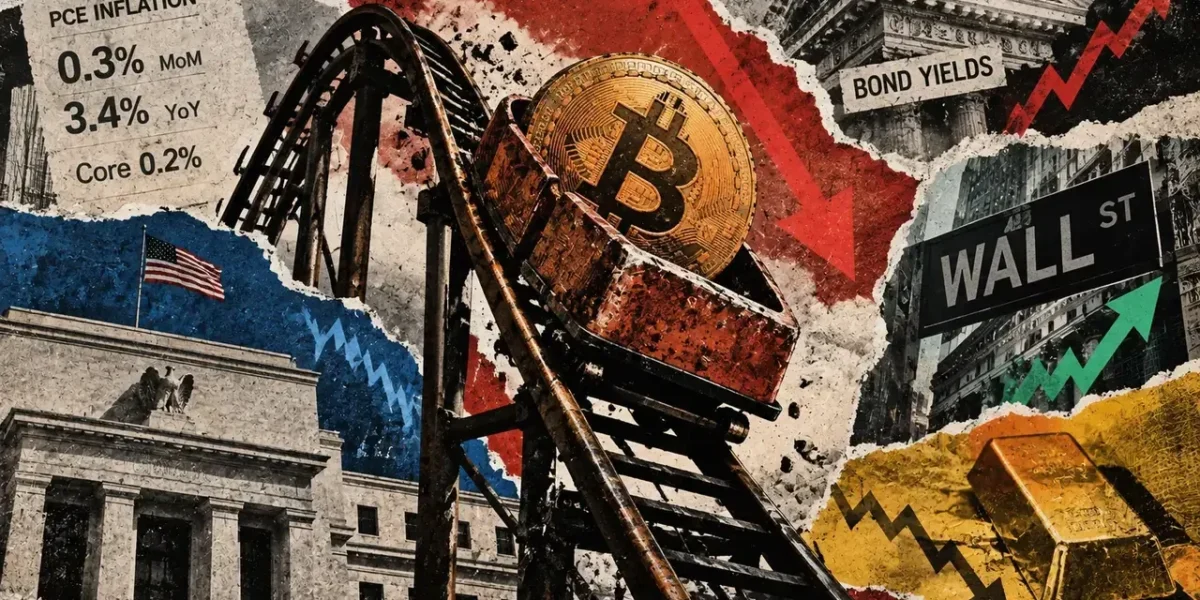
On Sept. 30, Bitcoin quickly retreated below $84,000 after a short-lived surge past $85,000, triggered by new US inflation figures as government bond yields bounced back and equities recovered.
This price action came in the wake of the August personal consumption expenditures (PCE) inflation report, which was published at 12:30 p.m. UTC. By 3:28 p.m. UTC, Bitcoin was changing hands near $84,000, failing to maintain its breakout momentum.
Despite the reversal from its initial post-release spike, Bitcoin maintained a modest 0.56% gain over a 24-hour period, balancing out the day’s volatile fluctuations.
According to data from the Bureau of Economic Analysis, headline PCE inflation came in at 0.3% month-over-month and 3.4% year-over-year. Meanwhile, core PCE—leaving out volatile food and energy items—advanced 0.2% month-over-month and 3.0% year-over-year.
Along with providing fresh inflation metrics, the report coincided with an annual update to the national economic accounts. The BEA noted that revisions affecting monthly estimates for personal income and outlays stretch back to January 2021, meaning analysts must exercise caution when evaluating past data.
Within the revised dataset, July’s monthly headline and core inflation figures both stood at 0.1%, while August printed at 0.3% and 0.2%, respectively. Comparing this fresh data directly against older, unrevised July figures would mean mixing incompatible versions of the statistics.
Furthermore, annual PCE inflation—the metric favored by the Federal Reserve—remained above the central bank’s longer-term 2% goal. While the release provided fresh insights for monetary policymakers, it did not seal the outcome of the Fed’s upcoming decisions.
While monthly updates highlight the most recent pace of consumer price growth, yearly metrics evaluate price shifts relative to the same month in the prior year. Consumer prices continued to advance on both fronts, even as Bitcoin initially attempted an upward push.
Stocks recover as yields turn back up
During the session, the SPDR S&P 500 ETF Trust was valued around $766.82, and Brent spot crude climbed back toward $102.20 per barrel.
Gold traded via contracts for difference near $4,163.92 an ounce, pulling back from an earlier high above $4,200. Meanwhile, the US Dollar Index hovered around 101.39 following a pullback from earlier intraday peaks.
In fixed income, the US 10-year Treasury yield hovered close to 5.276%, and the UK 30-year government bond yield registered near 5.939%, reinforcing a broader recovery in yields across major sovereign debt markets. Because bond yields move inversely to bond prices, this trend accompanied the rebounding equity and oil markets.
Because these afternoon quotes span various intraday windows, they do not directly isolate how every individual asset reacted to the inflation announcement alone. Instead, they illustrate equities and crude oil rebounding while Bitcoin struggled to hold onto its initial gains, with gold, the greenback, and yields moving in mixed directions.
While today’s PCE data tracks August, upcoming manufacturing and employment reports will reflect September conditions. These varying reference periods mean the broader economic and inflation outlook remains subject to change.
Ultimately, Bitcoin’s immediate takeaway was an inability to lock in gains above $85,000. Slipping below $84,000 left market participants monitoring whether subsequent recovery efforts could outlast initial buying bursts.
Frequently Asked Questions
01Why did Bitcoin fall back below $84,000 after crossing $85,000?
Bitcoin failed to sustain its breakout following the release of August US inflation data, concurrent with rising government bond yields and a recovery in traditional stock markets.
What was the reading for August PCE inflation?
Headline PCE inflation was reported at 0.3% month-over-month and 3.4% year-over-year. Core PCE rose 0.2% month-over-month and 3.0% year-over-year.
How do bond yields affect the broader financial markets?
Rising government bond yields—which reflect falling bond prices—often coincide with shifts in risk sentiment across equities, commodities, and digital assets like Bitcoin.