
FinCEN drops crypto mixing proposal as backlash kills rule
FinCEN has officially withdrawn its controversial 2023 proposal targeting crypto mixing and international cryptocurrency transactions following heavy pushback from commenters who warned about excessive reporting obligations.

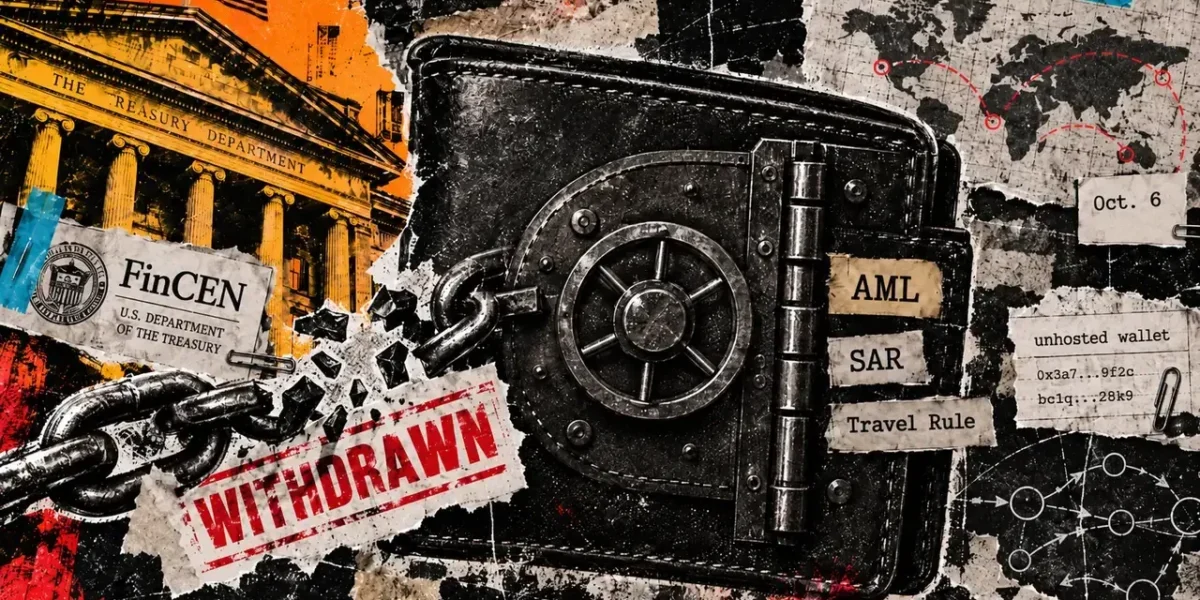
On Oct. 5, the U.S. Treasury’s Financial Crimes Enforcement Network (FinCEN) revealed that it is rescinding a reporting initiative targeting crypto mixing—a process involving methods designed to mask a transaction’s origin, final destination, or total value.
The scope of the initiative went far beyond specialized mixing platforms, mandating that financial institutions submit details regarding specific transactions and their clientele.
FinCEN is formally pulling back its 2023 determination designating international cryptocurrency mixing as a class of transactions posing a primary money laundering concern, alongside the associated recordkeeping and reporting mandate.
Scheduled for publication in the Federal Register on Oct. 6, the withdrawal notice specifies that the cancellation becomes effective immediately upon publication. FinCEN pointed to feedback from commentators who warned that the broad scope could deter lawful transactions and create heavy reporting obligations.
The proposed framework encompassed any protocol or service utilized, citing methods such as pooling funds, executing transactions via code, dividing transfers, routing assets through multiple temporary wallets, swapping cryptocurrencies, and adding intentional, user-driven delays.
These reporting requirements were triggered whenever a covered domestic financial institution was aware, suspected, or had grounds to suspect that a crypto transaction handled by, through, or directed to it involved mixing inside or connected to a jurisdiction outside the United States.
Furthermore, the definition exempted specific internal procedures utilized by banks, broker-dealers, and money services businesses to finalize transactions, assuming they maintained and supplied origin and destination logs upon lawful request.
For individuals using digital wallets, privacy concerns arose from the mandatory disclosures submitted by institutions. These disclosures would have encompassed wallet addresses, transaction hashes, IP addresses, and any customer identification data held by the institution, which would also be required to log its compliance efforts.
Compliance checks remain
Existing FinCEN guidance dictates that applicable cryptocurrency money transmitters are still obligated to maintain registration, risk-driven anti-money-laundering systems, relevant customer verification protocols, recordkeeping, and suspicious activity reports. Qualifying transfers continue to fall under the requirements of the Funds Travel Rule.
Current guidelines draw a line between anonymizing services that take in and forward value versus providers of anonymizing software. Merely distributing a tool does not classify an entity as a money transmitter, though managing a transmission service can.
An individual utilizing an unhosted wallet to purchase products or services for personal use is not categorized as a money transmitter solely for that reason.
FinCEN’s recent update likewise addresses the distinct unhosted-wallet rule introduced in December 2020. That measure was previously marked as withdrawn on April 12, 2024, as part of the Spring 2024 regulatory agenda, and the fresh notice confirms the agency will pursue no additional measures.
FinCEN indicated that it will keep tracking crypto mixing activities related to money laundering, terrorism funding, and other unlawful behaviors, leaving the door open for future actions. Financial institutions must continue adhering to their current responsibilities when evaluating privacy-focused transactions.
Frequently Asked Questions
01What is crypto mixing?
Crypto mixing refers to techniques used to obscure the source, destination, or amount of a cryptocurrency transaction to enhance user privacy.
02Why did FinCEN withdraw the proposal?
FinCEN withdrew the proposal following significant pushback from commenters who argued that the expansive definition would stifle legitimate activity and impose an excessive reporting burden on financial institutions.
03Are crypto regulations completely gone?
No. Covered crypto money transmitters remain subject to existing guidance, including registration, risk-based anti-money-laundering programs, customer checks, recordkeeping, and suspicious activity reporting.