
US expands Hamas sanctions after tracing crypto transfers from France
The United States has imposed new sanctions on three individuals and two French charities accused of funneling cryptocurrency and financial resources to Hamas, expanding screening obligations for U.S.-regulated crypto firms.

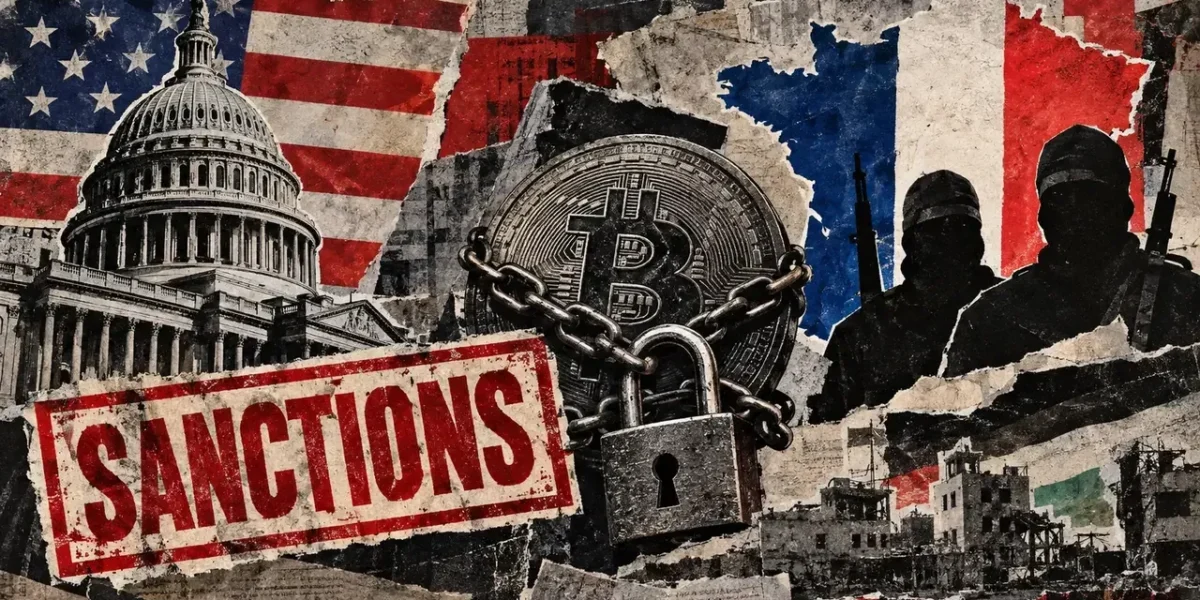
The United States has imposed sanctions on three individuals and two French charities, citing allegations that they funneled cryptocurrency and additional financial resources to Hamas.
On Oct. 2, the Treasury Department’s Office of Foreign Assets Control (OFAC) incorporated Association Baraka, Ensemble C Mieux, Faouzi Barika, Amel Oualid, and Saleem Abdallah Saleem al-Zaq into its sanctions roster. This action broadens the list of entities that cryptocurrency exchanges and payment services operating under U.S. regulations are required to screen.
According to Treasury allegations, Barika and Oualid—both located in France—transferred hundreds of thousands of dollars worth of cryptocurrency to al-Zaq, identified by the agency as a Gaza-based deputy battalion commander within the military wing of Hamas. The Treasury states that these two fundraisers, alongside their linked organizations, gathered upwards of $2 million for Hamas between the years 2020 and 2026.
The agency clarified that the entirety of the $2 million was not moved via digital assets, separating that comprehensive fundraising total from the specific cryptocurrency transfers linked directly to Barika and Oualid.
These designations build upon ongoing U.S. campaigns to dismantle Hamas financial channels as authorities increasingly track digital-asset movements alongside conventional banking and cash methods. Furthermore, the action instantly subjects the targeted parties to existing OFAC controls regarding assets owned by U.S. citizens or traversing U.S. financial jurisdiction.
Crypto firms face new screening obligations
U.S. custodial services, payment processors, and exchanges are mandated to freeze any assets in which the designated individuals or groups hold an interest if those assets enter their control or possession, barring an applicable OFAC exemption or license.
This mandate additionally applies to firms that are directly or indirectly owned at or above 50% by one or more blocked entities, meaning compliance personnel may be obligated to investigate organizations beyond the five specific names released by the Treasury.
OFAC evaluates digital assets using the identical regulatory framework applied to fiat money and other forms of property. Any U.S.-regulated cryptocurrency business that detects assets belonging to a restricted individual must block access and notify the agency within a 10-business-day window. These frozen assets must also comply with yearly reporting mandates.
Regulators do not mandate that companies convert restrained cryptocurrency into U.S. dollars, permitting custodians to maintain the funds in their original state while barring the targeted parties from moving or utilizing them.
These penalties may additionally carry repercussions outside of the United States. The Treasury cautioned that international financial institutions risk facing secondary sanctions if they knowingly enable major transactions for individuals or entities listed under the specific authority, heightening compliance risks for overseas exchanges and intermediaries that interact with the network.
Such measures do not constitute a universal ban on every blockchain transfer linked to the penalized individuals. Enforcement relies heavily on geographical jurisdiction, ownership structures, the presence of blocked assets, and—in certain instances—the awareness and materiality associated with a transaction.
The upcoming challenge for digital asset businesses involves determining whether U.S. enforcement agencies will disclose further wallet addresses, intermediaries, or associated organizations linked to this network. Any future revelations could expand screening duties past the individuals recently added to the registry, compelling platforms to evaluate past transactions involving the reported fundraising apparatus.
Frequently Asked Questions
01Who was targeted in the latest U.S. sanctions?
The Treasury Department sanctioned two French charities—Association Baraka and Ensemble C Mieux—alongside three individuals: Faouzi Barika, Amel Oualid, and Saleem Abdallah Saleem al-Zaq.
02How much money was allegedly raised for Hamas?
According to Treasury estimates, the fundraisers and their associated entities gathered more than $2 million for Hamas between 2020 and 2026, which included hundreds of thousands of dollars sent in cryptocurrency.
03What are the requirements for U.S. crypto firms under these sanctions?
U.S. exchanges, payment processors, and custodians must freeze any assets tied to the designated parties if those funds enter their control, and they must report the frozen property to OFAC within 10 business days.